
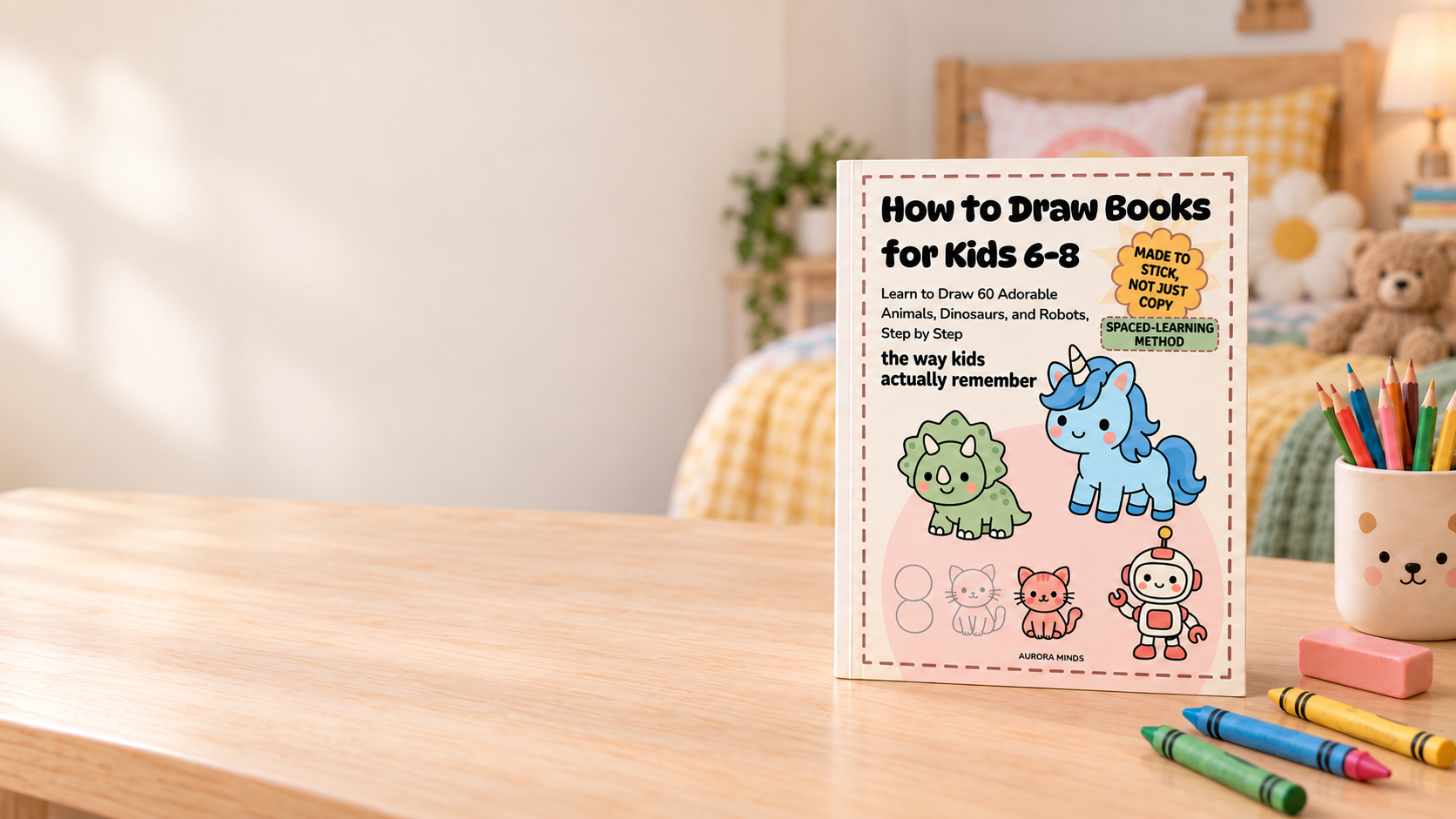
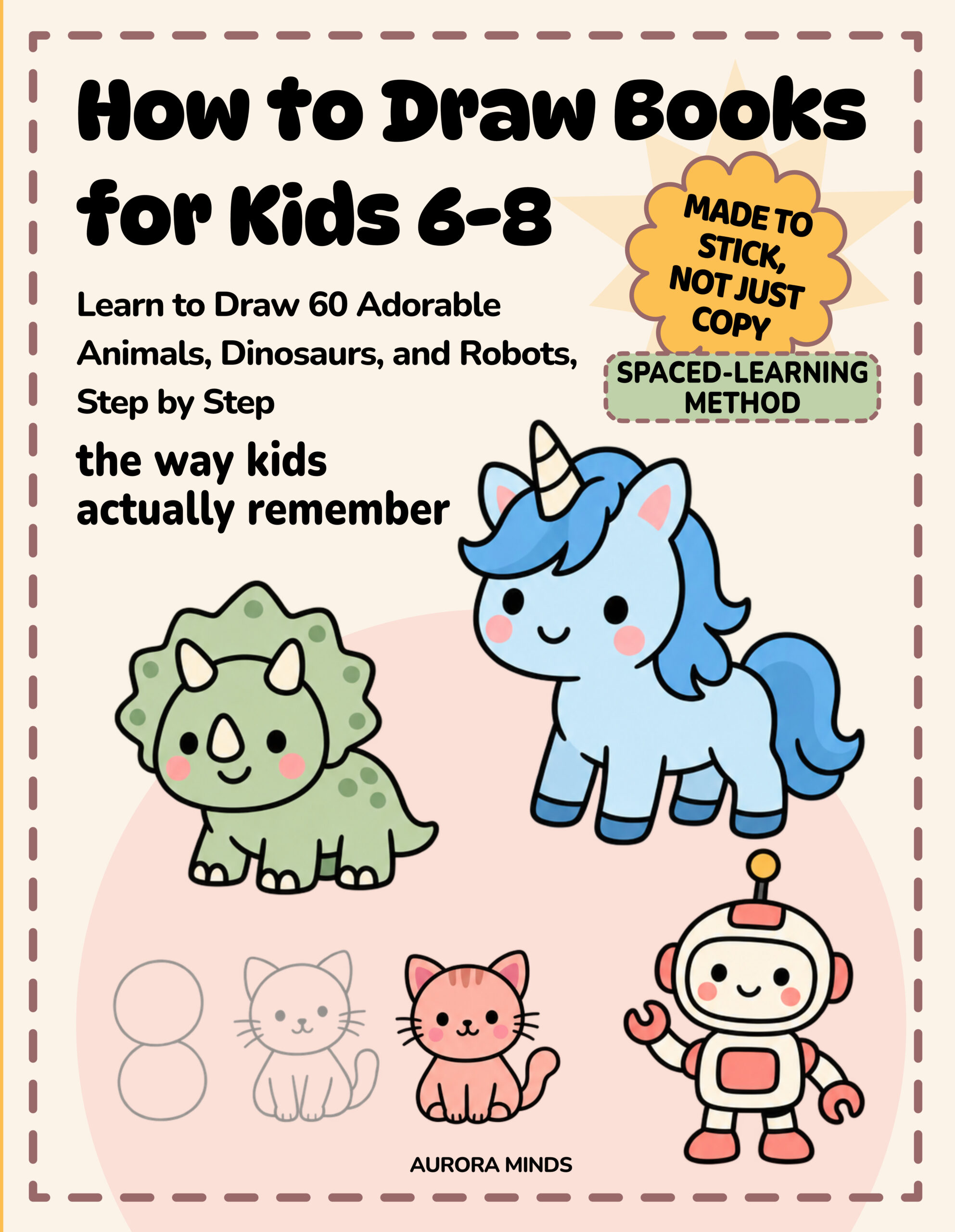
How to Draw Books
for Kids 6–8
Learn to draw 60 adorable animals, dinosaurs, robots, and more, step by step — the way kids actually remember.
Made to stick. Not just copy.
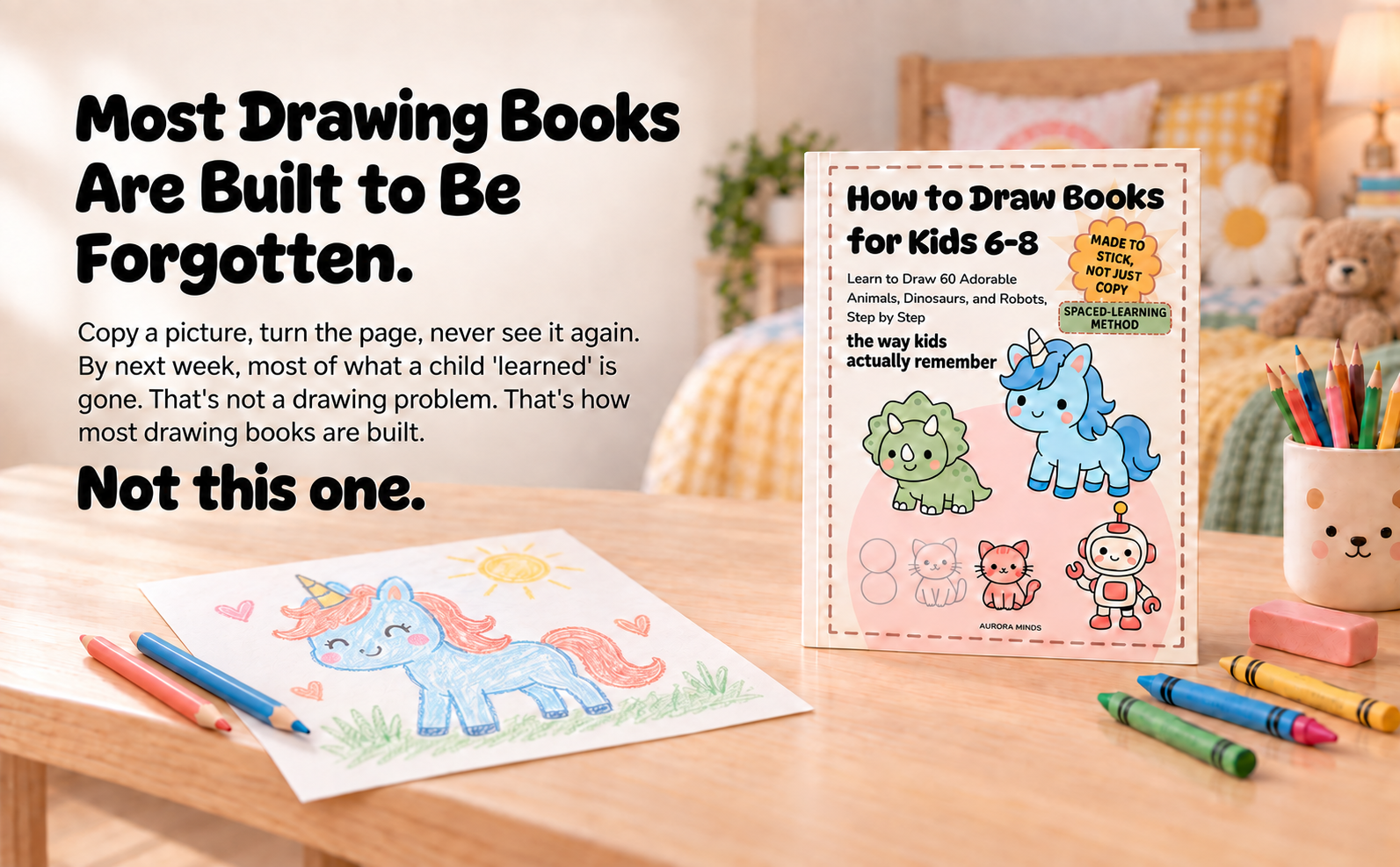
Copy it once.
Forget it later.
Many drawing books show a child how to copy a picture, then move straight on to the next one.
This book takes a different approach. Characters return later in the book, after some time has passed, so your child has another chance to retrieve the shapes and movements they practiced before.
The goal is not to race through as many drawings as possible. It is to give each drawing another chance to stick.
Learn it.
Leave it.
Meet it again.
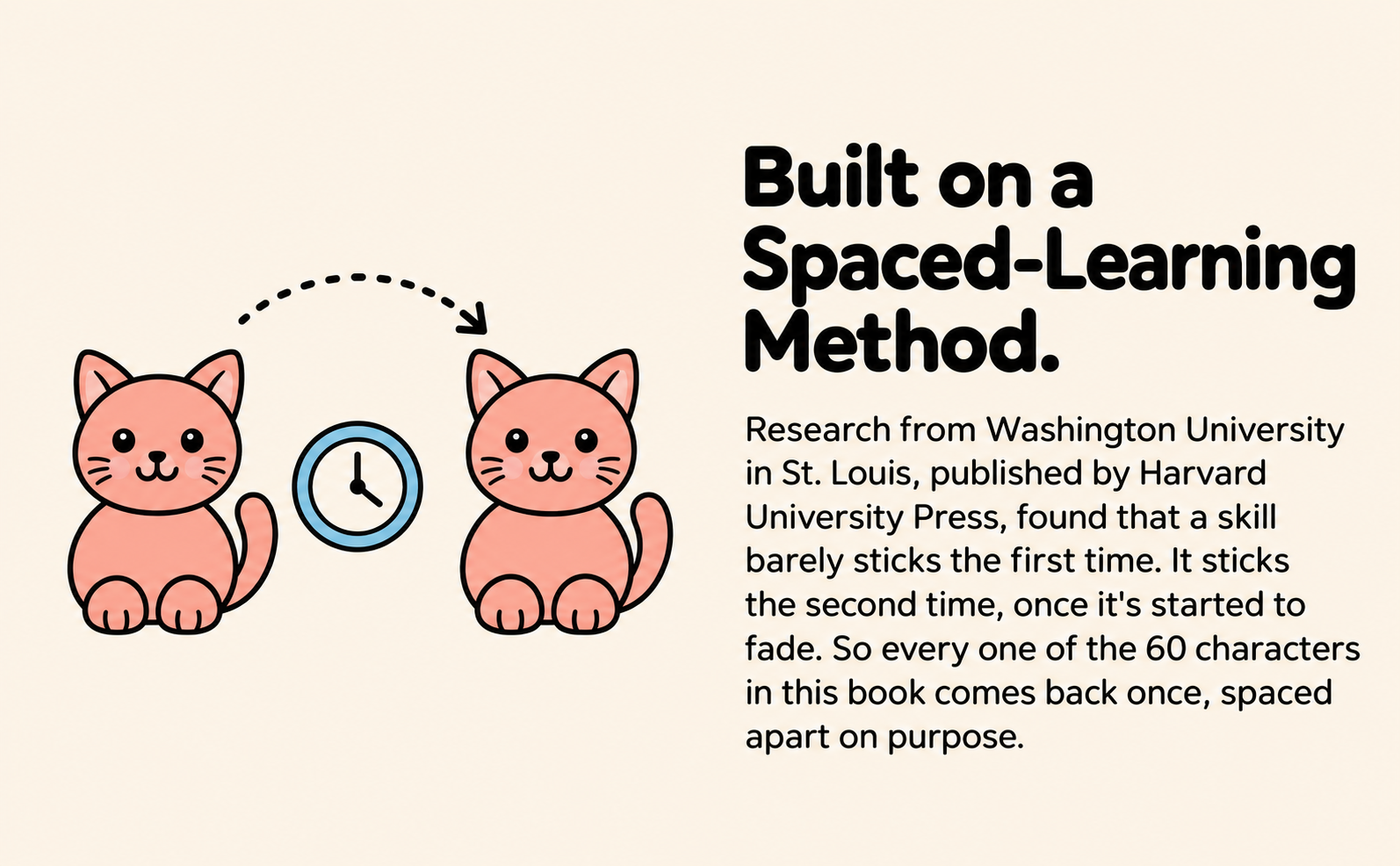
Every one of the 60 characters appears again later in the book, spaced apart on purpose.
Instead of repeating the same drawing immediately, children return to it after other lessons have come in between. That small act of remembering asks more from the brain than simply copying something that is still fresh.
See how a lesson works.
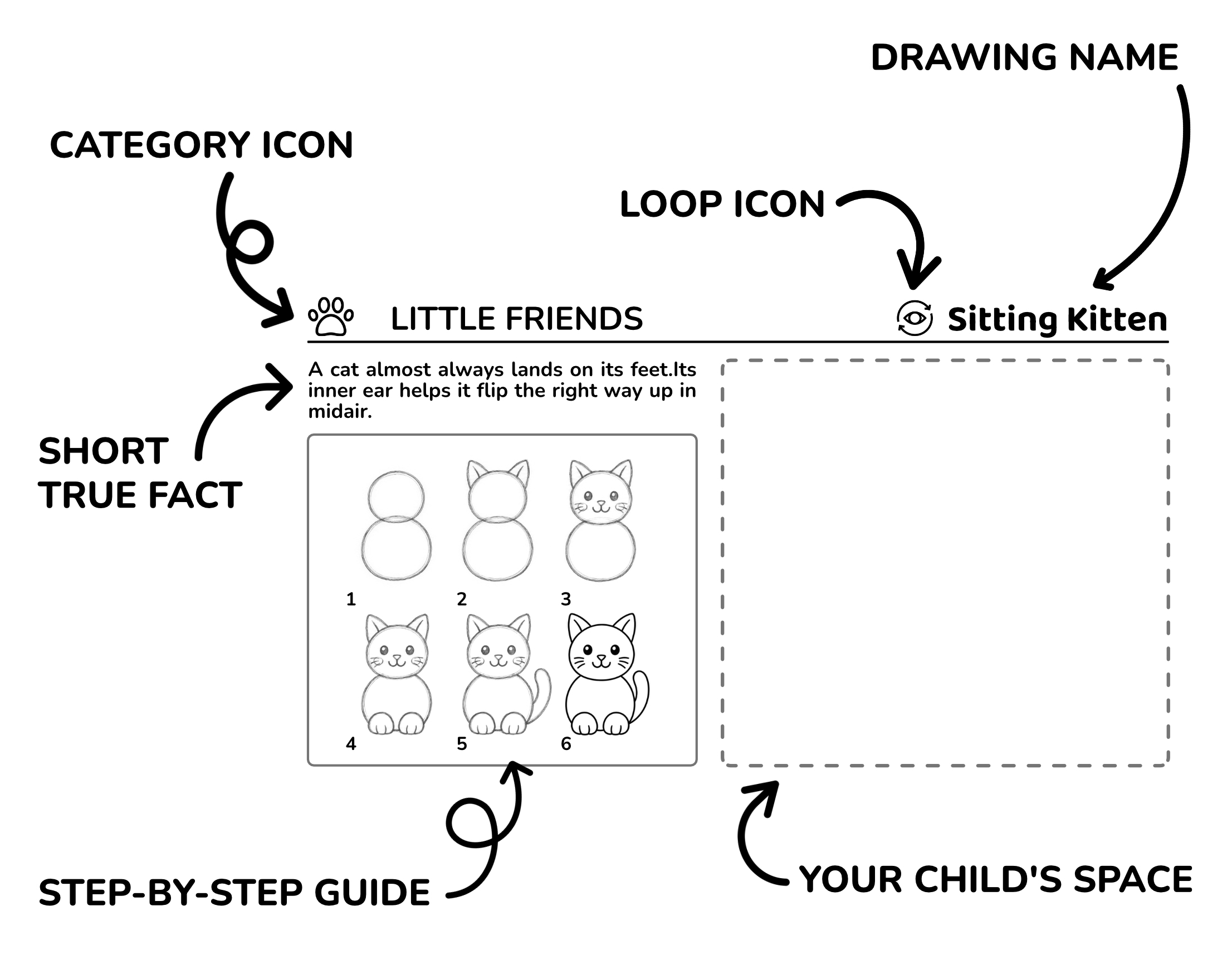
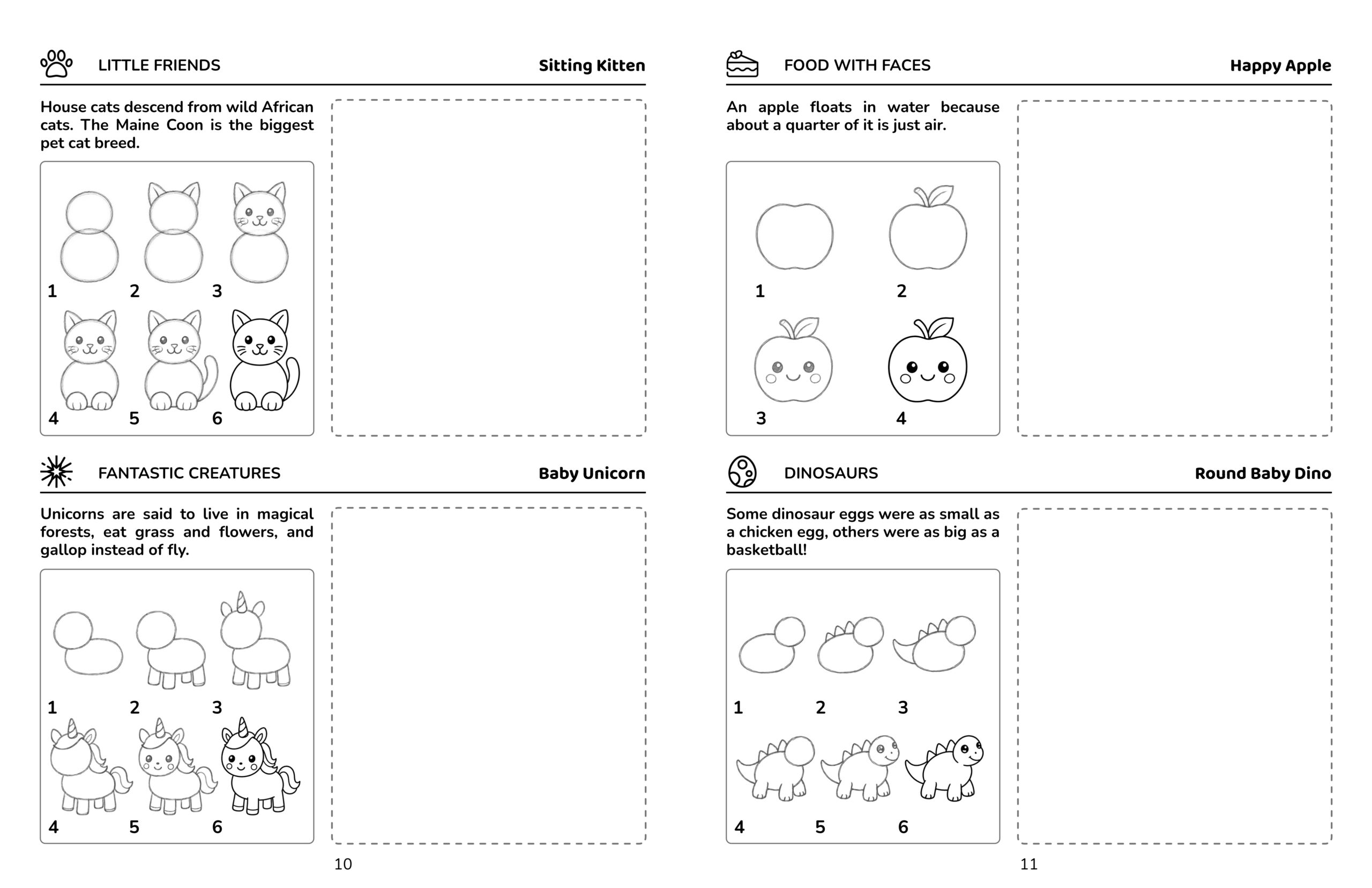
Clear steps on one side. A large, empty drawing space on the other. No clutter. No tracing. No picture printed where your child is supposed to create.
Built for young hands,
not just younger eyes.
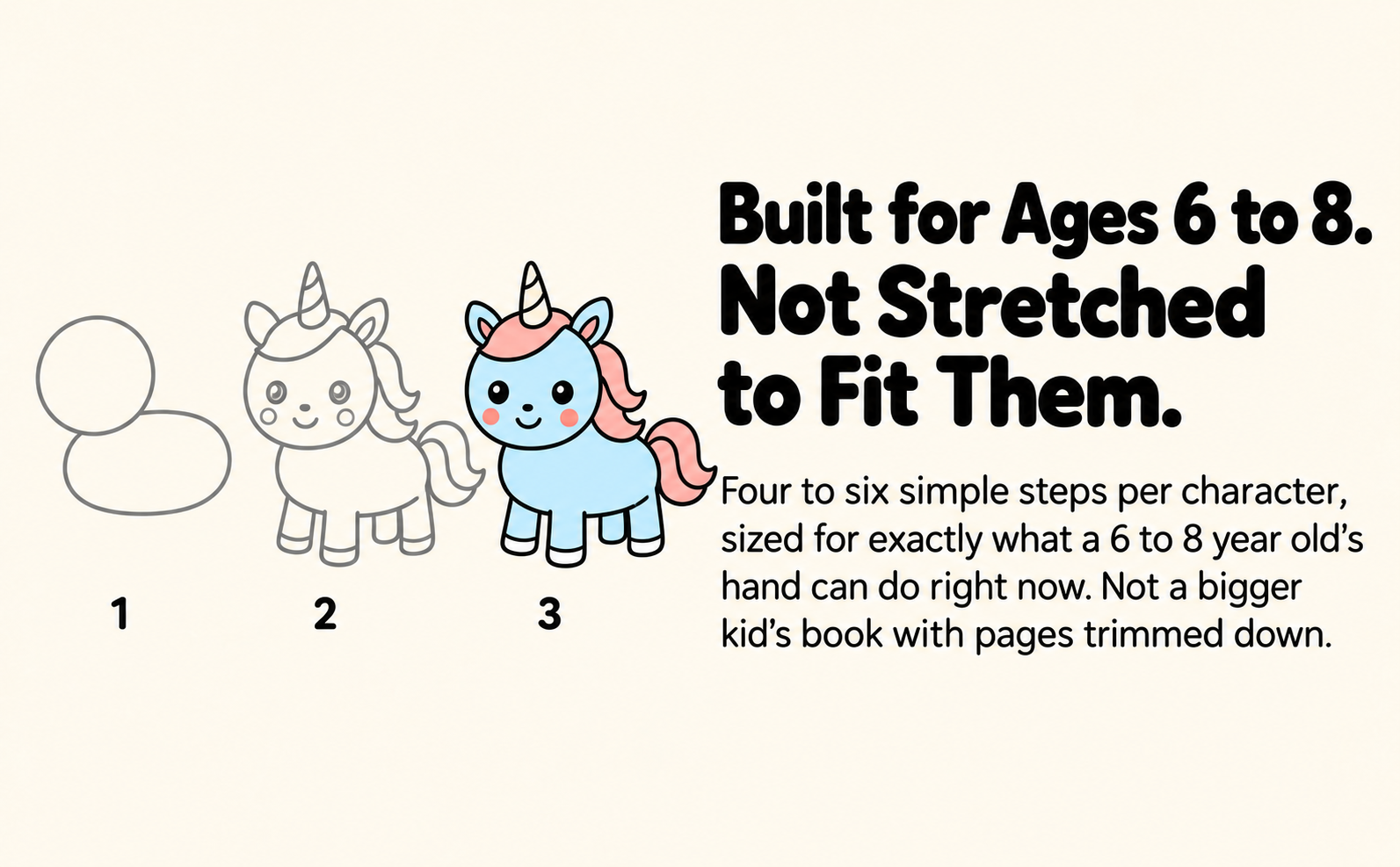
4–6 Simple Steps
Each character grows from basic shapes into a finished drawing without overwhelming the page.
Space to Draw
Every lesson gives children a dedicated blank area to create their own version beside the guide.
True Facts
Short facts add an extra moment of discovery without getting in the way of the drawing itself.
Return & Remember
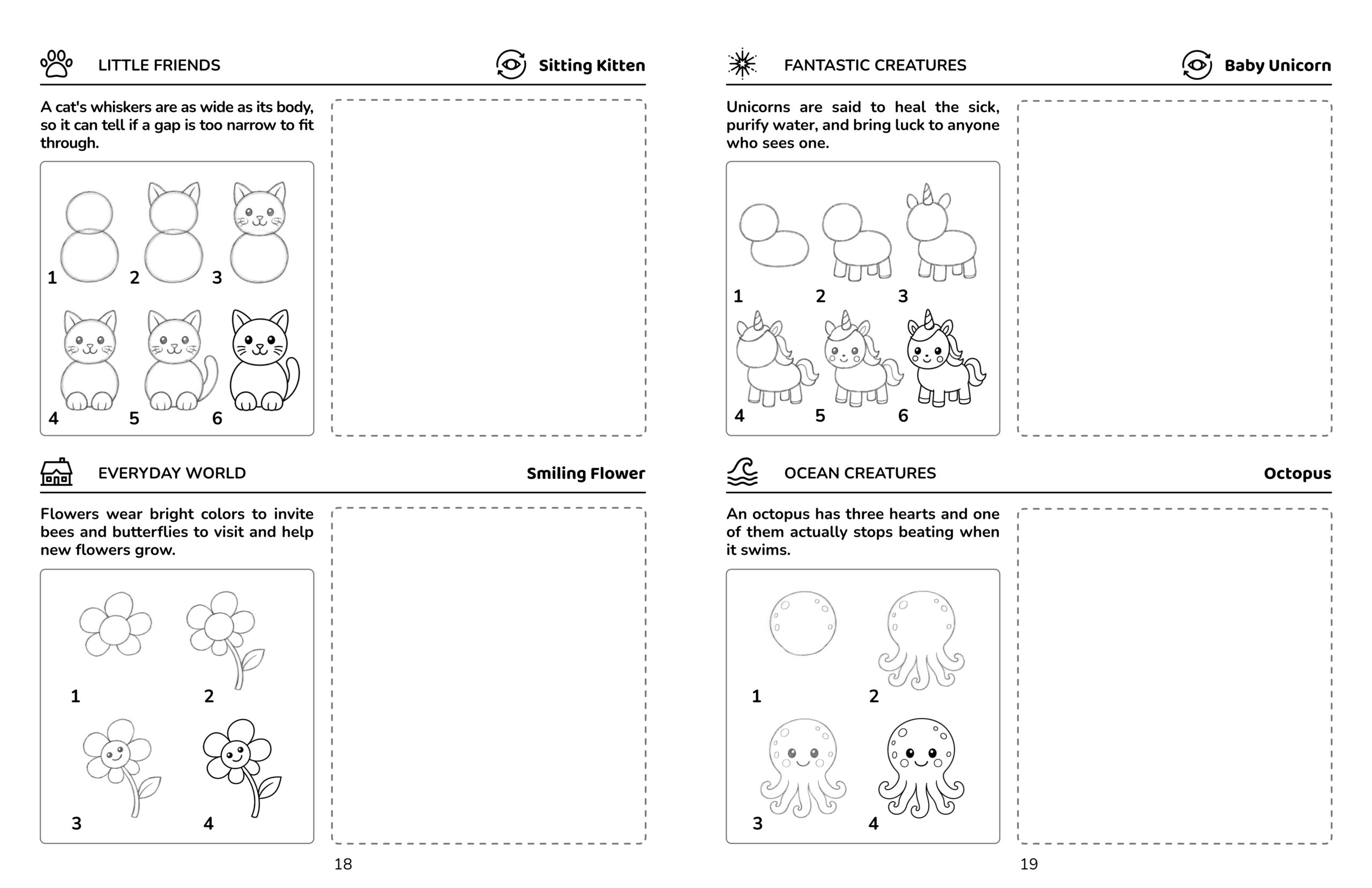
The loop icon shows when a character has returned for a second round of spaced practice.
Not a bigger kid’s book trimmed down.
The drawings were built around what a six- to eight-year-old can realistically follow and reproduce.
Most characters use four to six visual steps, progressing from recognizable shapes to the final line drawing. The aim is enough challenge to feel like real drawing, without turning the page into a test.
First they draw it.
Later, it comes back.
Sitting Kitten is introduced near the beginning of the book, then returns later with a new fact and the loop icon.
60 characters.
11 kinds.
One method.
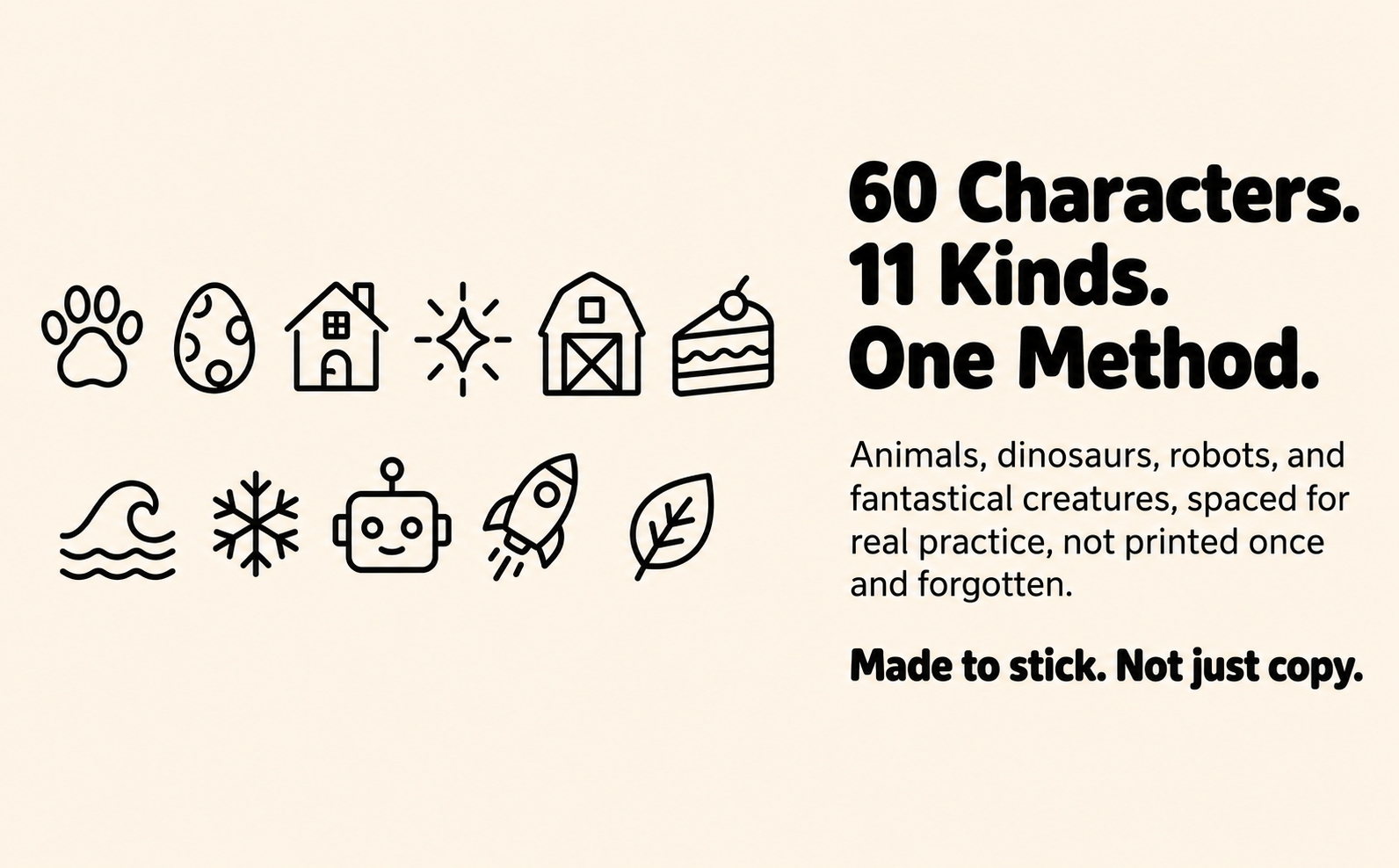
Cats and puppies. Dinosaurs and robots. Sea creatures, space, farm animals, magical friends, and much more.
The variety keeps the book moving while the underlying lesson structure stays familiar.
They already know the character.
Now they make it move.
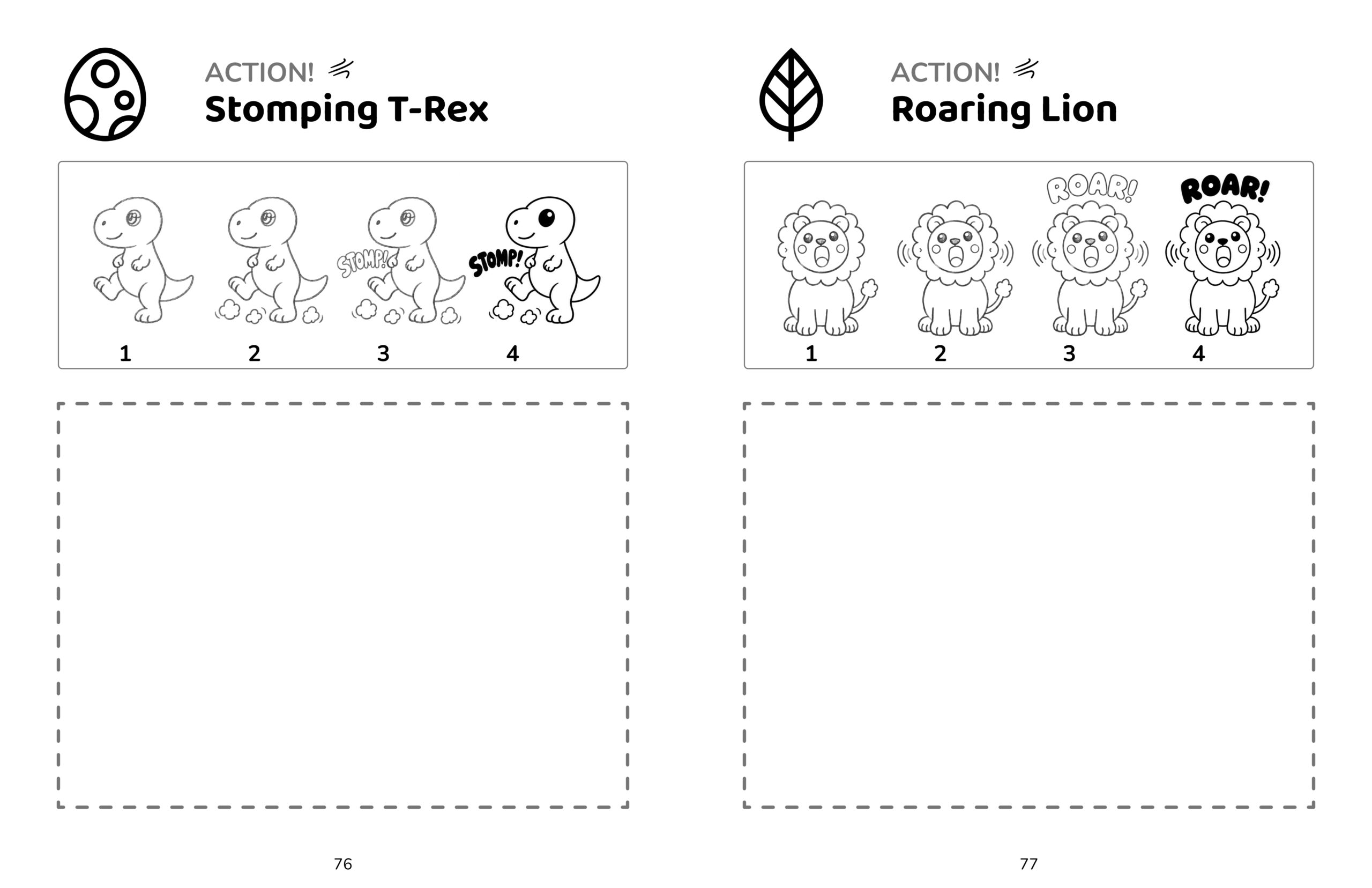
After the main lessons, the ACTION section takes familiar drawings one step further.
A T-Rex stomps. A lion roars. A monkey waves. A rocket blasts off. Children use characters they already recognize and learn how small changes can create movement and personality.
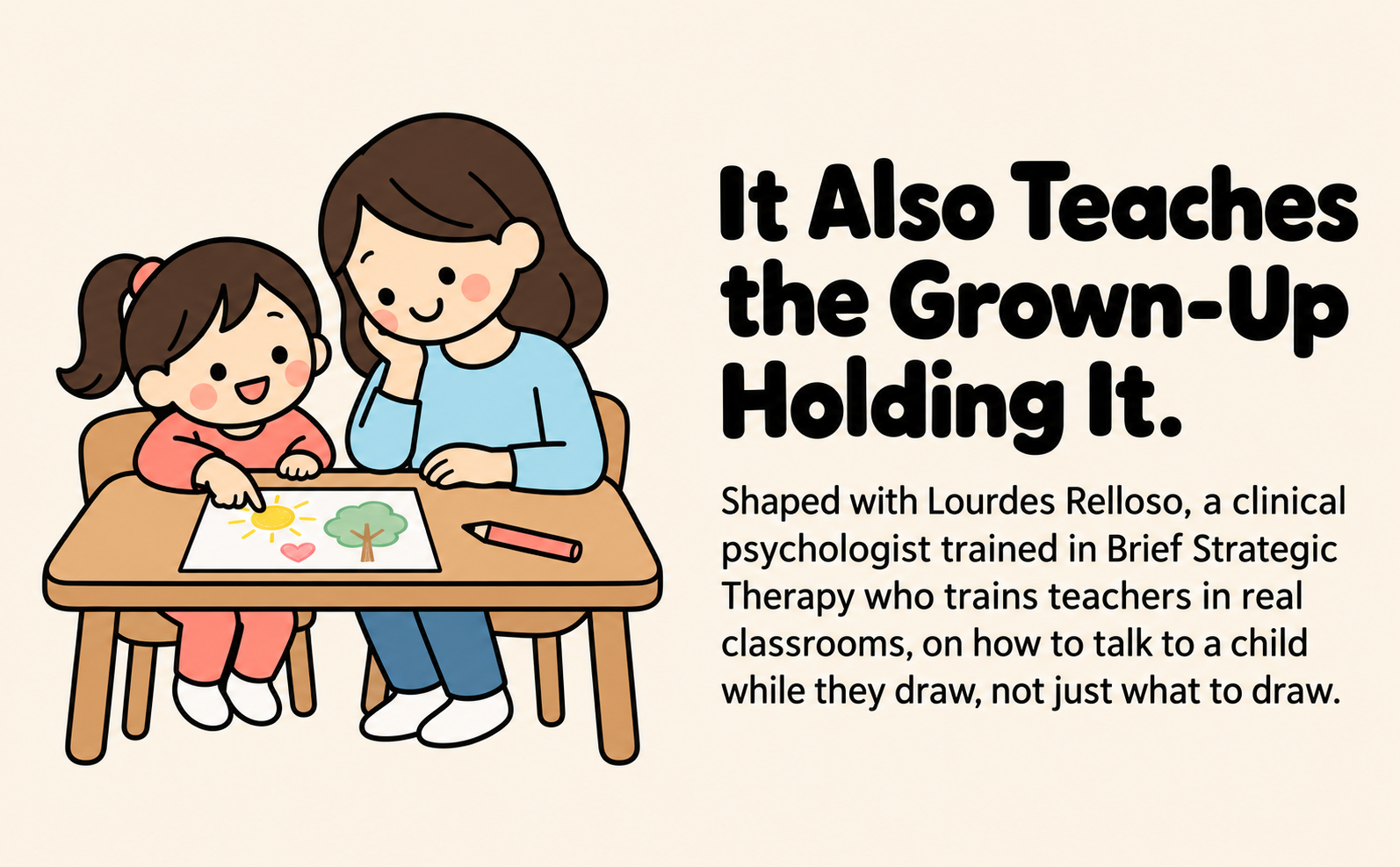
It also teaches the grown-up holding the book.
What adults say while a child draws can matter as much as the drawing instructions themselves.
The parent guidance in this book was shaped with Lourdes Relloso, a clinical psychologist trained in Brief Strategic Therapy who has worked with teachers in real classrooms.
Instead of relying only on generic praise, the guidance encourages specific attention to what the child actually did: noticing the line, shape, detail, decision, or effort in front of you.
More than a stack of drawing prompts.
A complete drawing experience built around practice, variety, independence, and the simple satisfaction of making something yourself.
A little extra for the grown-up behind the little artist.
Two printable resources are available to readers through the QR code inside the book.

Parent Quick-Reference Guide
What to say when your child asks “Is this good?”, gets frustrated, or wants to quit halfway through. Built with Lourdes Relloso.
Certificate A printable keepsake for your child’s favorite drawing.
Printable Little Artist Certificate
A certificate your child can complete after choosing the drawing they are proudest of.
Every drawing starts with one shape.
Give them a pencil, a page, and something they can learn to make for themselves.
Get the Book on Amazon