
Getting to know the world
In the first year your child learns to look at you, answer your voice and take turns. Nobody is coloring yet. This stage is here so you can see where the road starts.
← All stages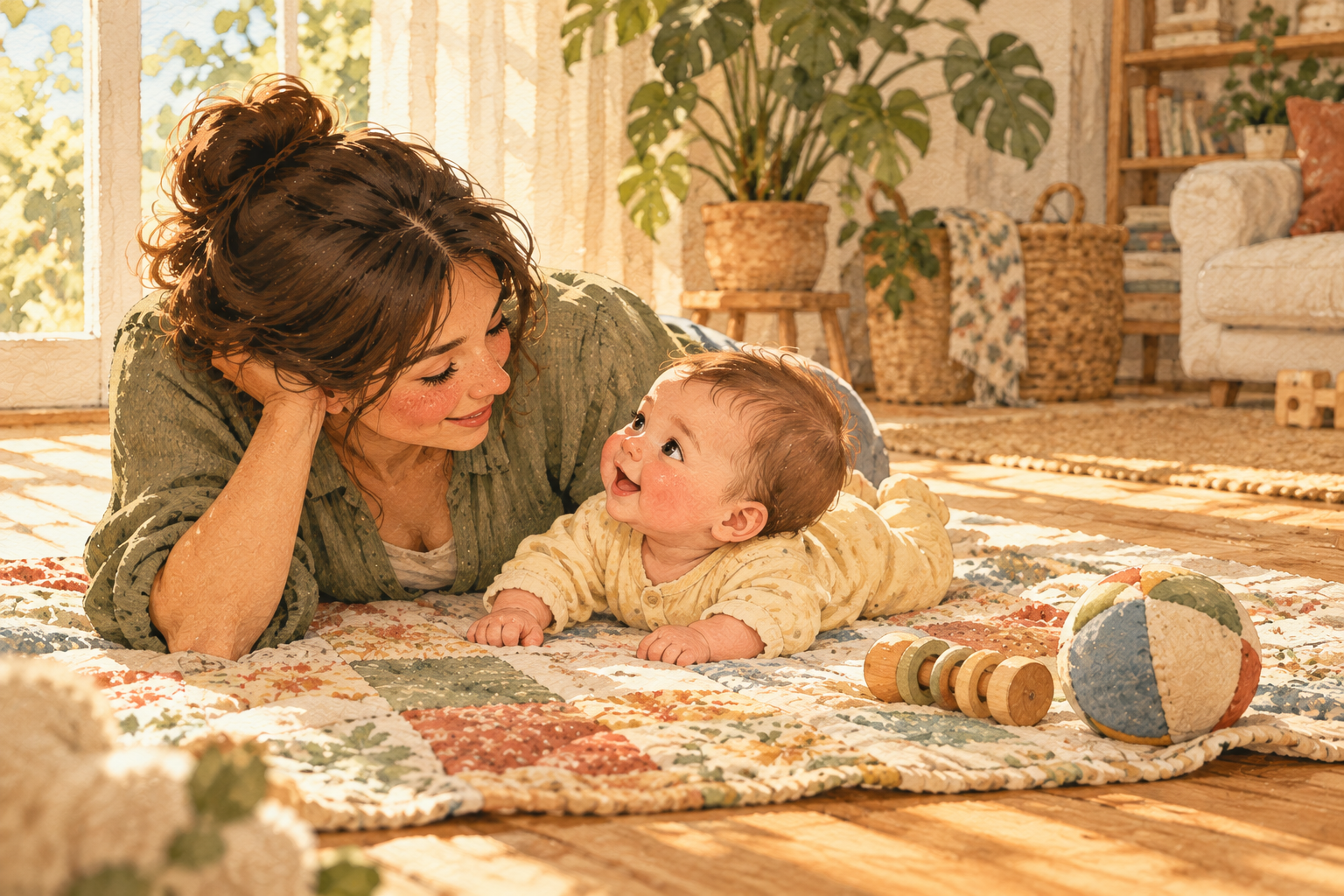
General information, not medical advice. Every child develops at their own pace, and a web page can’t assess an individual child. If you have questions about how your child is growing, learning, feeling or behaving, talk to your child’s pediatrician.
What many babies do
The CDC defines developmental milestones as “things most children (75% or more) can do by a certain age.” Some children get there earlier and some later. Here are a few CDC milestones from the first year.
2 months
- Looks at your face
- Smiles when you talk to or smile at them
- Makes sounds other than crying
- Holds their head up when on their tummy
6 months
- Knows familiar people
- Laughs
- Takes turns making sounds with you
- Rolls from tummy to back
9 months
- Looks when you call their name
- Makes lots of different sounds, like “mamamama” and “bababababa”
- Smiles or laughs when you play peek-a-boo
- Sits without support
1 year
- Plays games with you, like pat-a-cake
- Waves “bye-bye”
- Calls a parent “mama” or “dada” or another special name
- Pulls up to stand
Source: CDC, milestones by 2 months, 6 months, 9 months and 1 year. Wording adapted.
None of these milestones asks for a special product. They grow out of looking, listening and taking turns with you.
Answer, copy and name

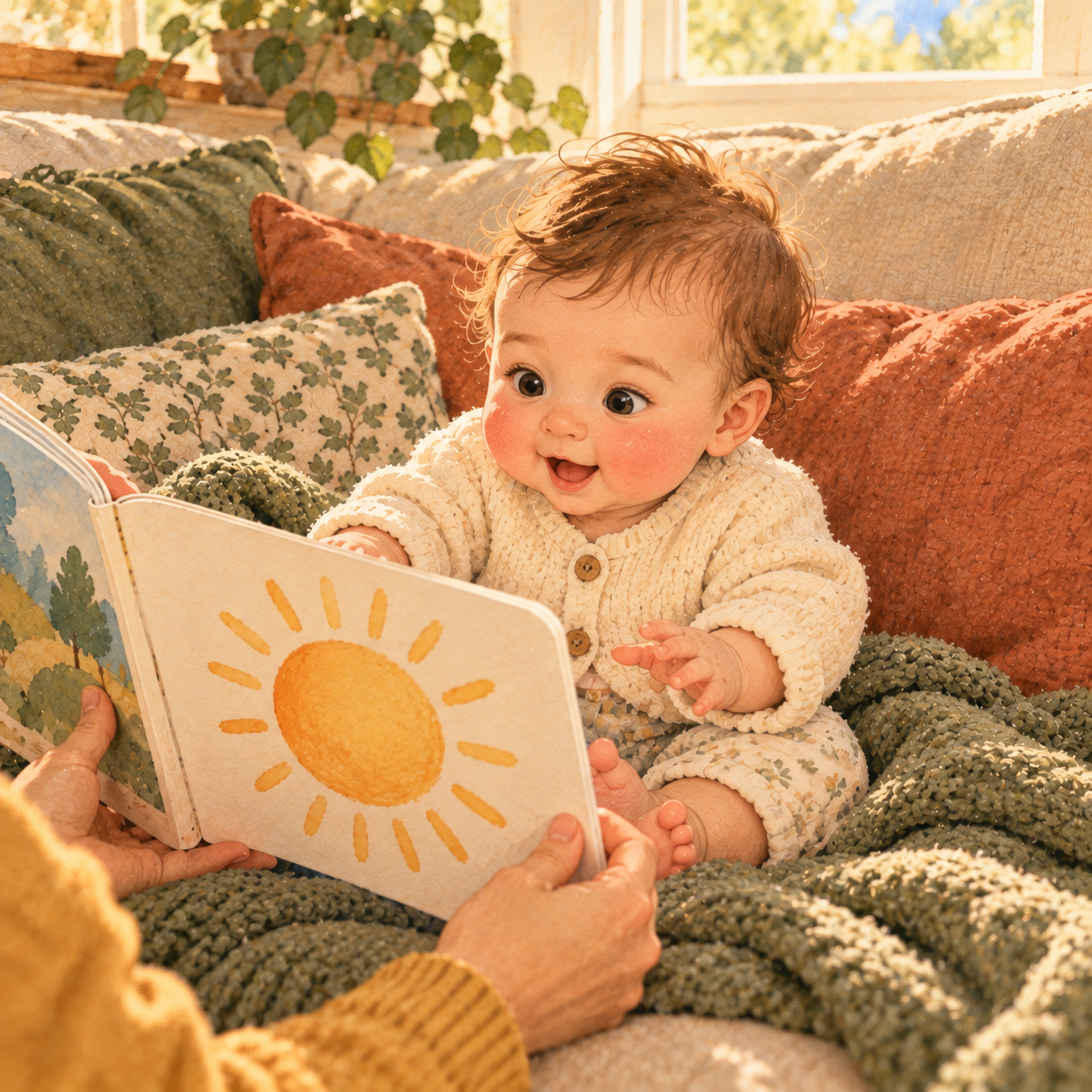
The CDC’s tips for these ages are about conversation, not equipment. At 2 months, it suggests reacting warmly when your baby makes sounds and talking back and forth with them. At 6 months, it suggests looking at colorful pictures together every day and responding when your baby babbles. At 9 months, it suggests copying the babbling and adding a real word. At 1 year, when your baby points at something, it suggests answering with words and naming the object.
On screens, the CDC’s tips for 6 months say to use them only for video calls, and that screen time is not recommended before age 2.
There is no coloring at this stage, and nothing to buy. What the CDC suggests is free: look at your baby, talk, wait for a sound and answer it.
Books for looking, holding and chewing
We describe kinds of books, not titles, because titles come and go. Where a CDC or AAP page supports the idea, we say so. The rest is our own reading. Before you buy anything, our ten questions apply at every age.
Sturdy board books
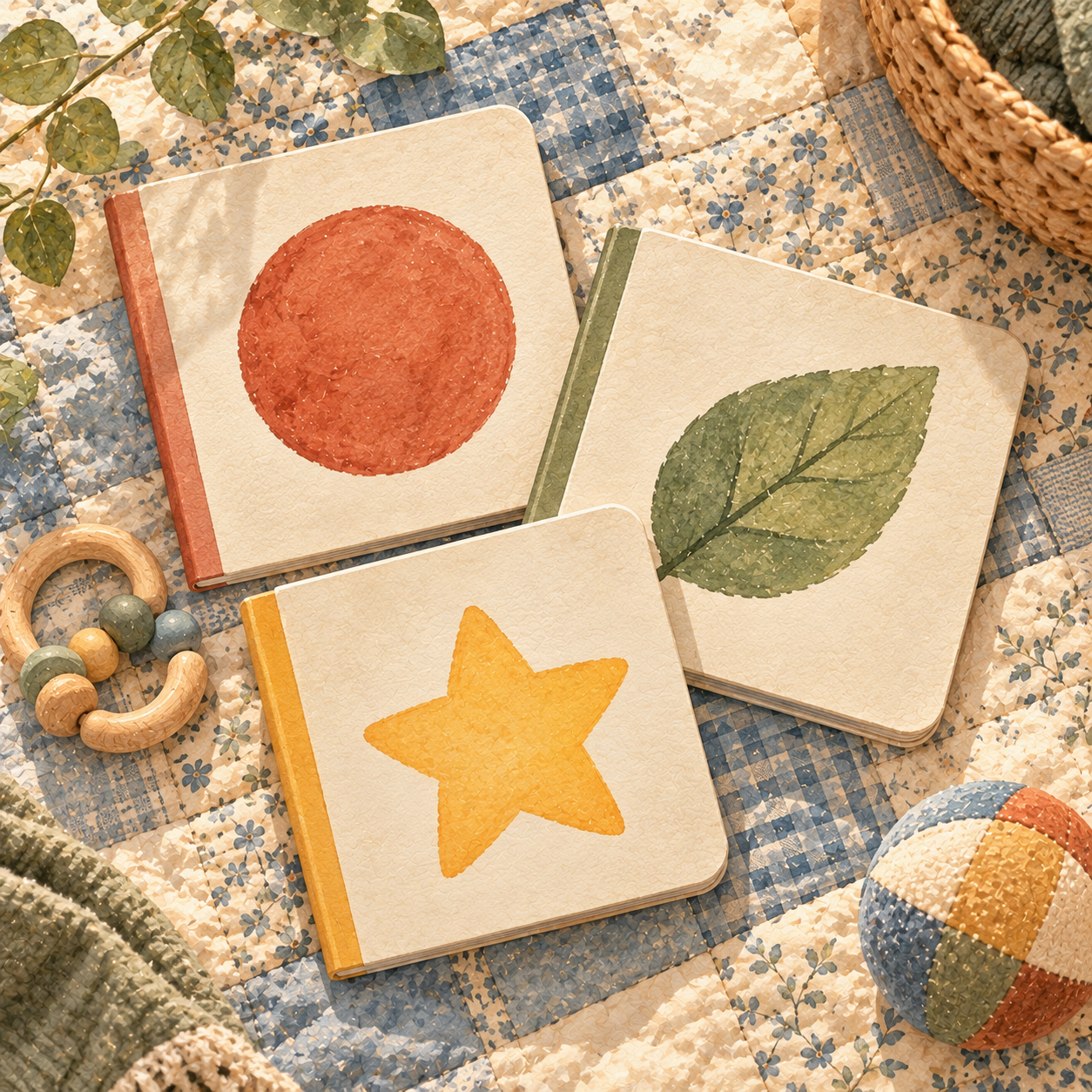
Thick pages a baby can grab and chew without harm. Check that nothing can come loose.
Why: Our reading. Safety is question 6 on our list of ten.
Big, clear, colorful pictures
One or two images per page, large and uncluttered, so your baby has something to look at while you talk.
Why: The CDC’s tips for 6 months suggest looking at colorful pictures together every day.
Faces
Photos or drawings of babies’ faces.
Why: Looking at your face is a CDC milestone at 2 months. Choosing books with faces is our reading.
Simple words and repeated sounds
Short rhymes, songs and animal sounds you can say again and again while your baby babbles back.
Why: The CDC’s tips for 9 months suggest copying the babbling and adding a real word.
One object per page
A ball, a cup, a dog: something your baby can point at and you can name.
Why: At 1 year, the CDC suggests answering when your baby points by saying the name of the object.
Sources
If you are worried about your child, talk to your child’s pediatrician. Our page For every age lists when to seek support. Links go to the original pages. Naming an organization or a study here does not mean it has reviewed or endorsed this guide or any Aurora Minds product. Last updated: October 2026.
This guide stays free and open.
If you’d like to hear when we add new guides, creative activities and useful resources, leave your email.
Thoughtful resources, sent occasionally. You can unsubscribe at any time.