
Exploring, naming and scribbling
Between 12 and 36 months, a lot changes. Children start to scribble, point at pictures, name things in books and pretend. This stage covers what many children do, what coloring looks like for a toddler, and what you can say and do while your child scribbles, colors or looks at a book.
← All stages
General information, not medical advice. Every child develops at their own pace, and a web page can’t assess an individual child. If you have questions about how your child is growing, learning, feeling or behaving, talk to your child’s pediatrician.
What many children do at this age
Here are a few CDC milestones that connect with coloring and looking at books together.
18 months
- Scribbles
- Looks at a few pages in a book with you
- Points to show you something interesting
- Tries to say three or more words besides “mama” or “dada”
2 years
- Points to things in a book when you ask, like “Where is the bear?”
- Says at least two words together, like “More milk.”
- Holds something in one hand while using the other, like holding a container and taking off the lid
30 months
- Says about 50 words
- Names things in a book when you point and ask, “What is this?”
- Shows they know at least one color, like pointing to a red crayon when you ask, “Which one is red?”
- Turns book pages one at a time when you read together
- Uses things to pretend, like feeding a block to a doll as if it were food
3 years
- Draws a circle when you show them how
- Says what action is happening in a picture or book when asked, like “running,” “eating,” or “playing”
- Talks with you in conversation, with at least two back-and-forth exchanges
Source: CDC, milestones by 18 months, 2 years, 30 months and 3 years. Wording adapted.
Notice what is not on those lists: staying inside the lines. For this age, the CDC’s drawing milestones are scribbling at 18 months and drawing a circle at 3, once you show how.
Scribbles count
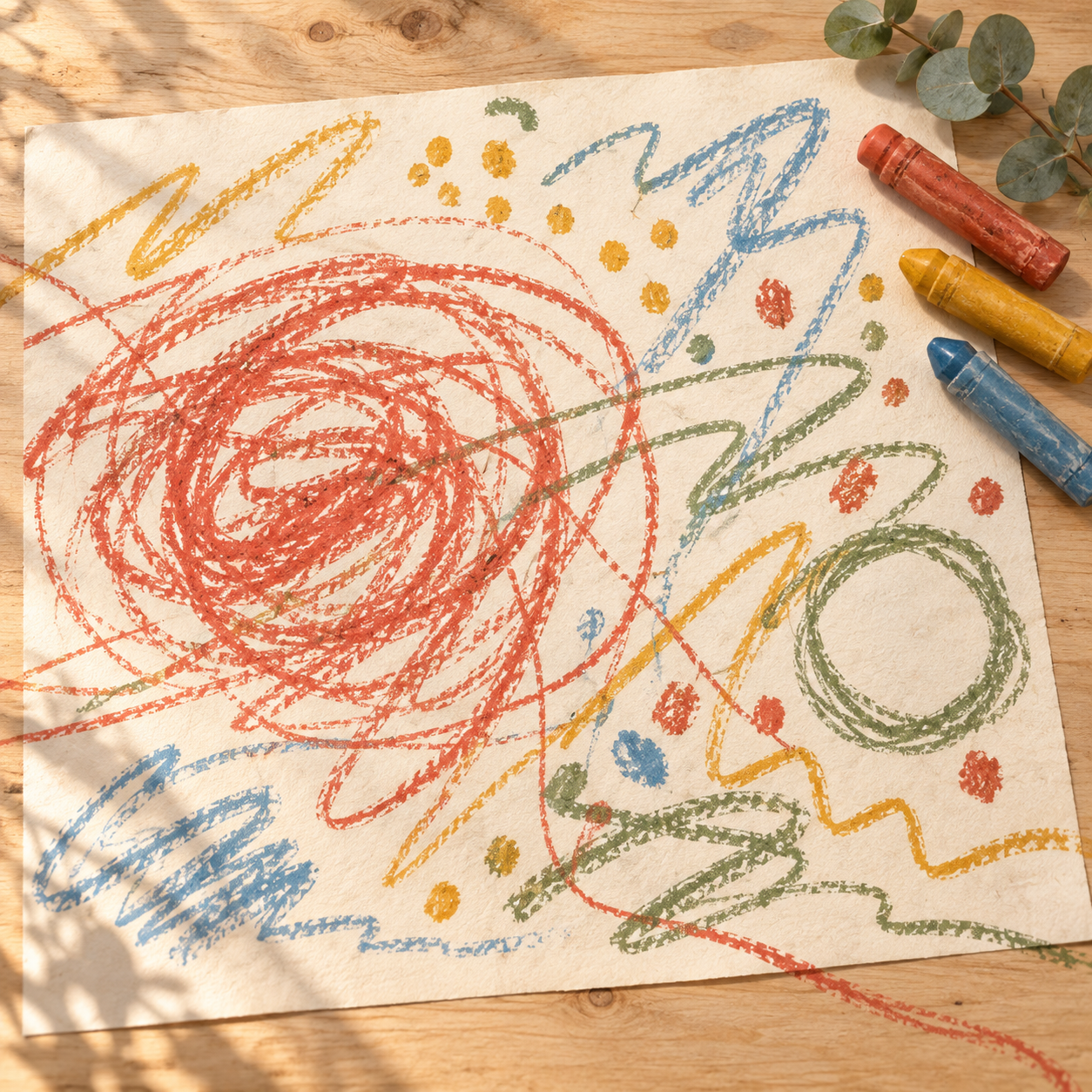
A scribble can look random to an adult. Some researchers argue it isn’t. A 2015 paper in Frontiers in Psychology looked at drawings by children aged 0 to 3 from Italian nurseries and argued that scribbles carry intent. In their reading, early lines express how things move and how the child feels about them, and later lines shrink into simple outlines of things the child imagines. It is a theory paper built on example drawings, not an experiment, so take it as a way of looking at scribbles, not as proof.
The CDC’s suggestions for activities are modest. At 2 years, it suggests giving your child crayons or finger paint and letting them explore by making dots and spreading the paint around. At 30 months, it suggests letting your child “draw” with crayons on paper, shaving cream on a tray or chalk on a sidewalk. If you draw a straight line, see if your child copies it. When lines get easy, show how to draw a circle.
This is why we don’t ask a child this age to stay inside the lines. It is not a milestone, and a page that expects it turns coloring into a test.
What to say while your child draws
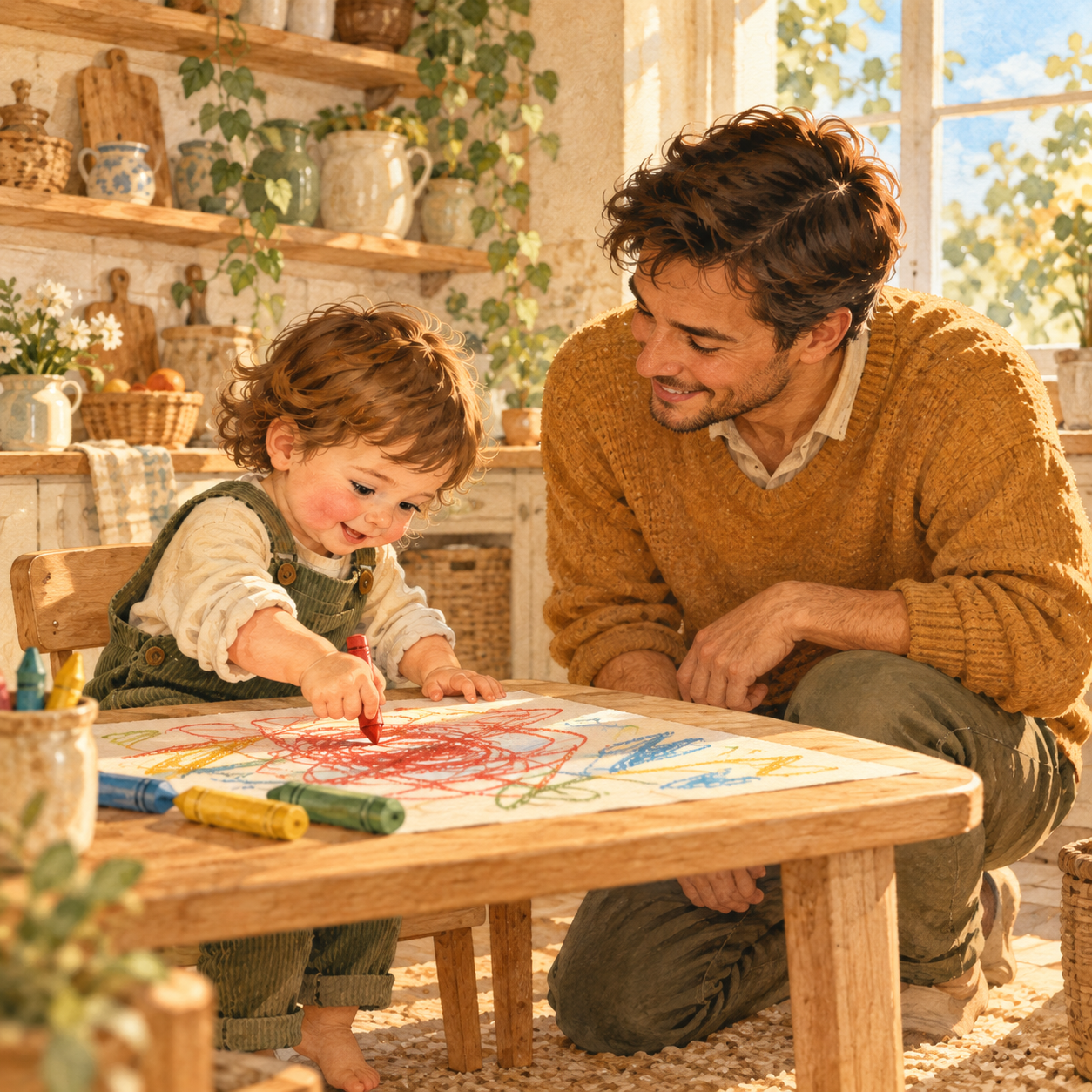
In an article for NAEYC’s Teaching Young Children, teacher Ron Grady describes one question he used with 2- and 3-year-olds: “Tell me about what you have here.” He writes that it invites a response and does not demand a particular right answer. It is one teacher’s classroom account, not a study.
The same article describes something many parents will recognize. The 2- and 3-year-olds in his class often asked the teachers to draw particular things, and then felt their own drawings were not as good because they did not look like the teachers’ work.
If your child isn’t talking much yet, NAEYC’s guide for families suggests putting words to what they are doing. If they get stuck, it suggests waiting and giving them space to work through the problem.
Some things you can say, in our own wording:
- “Tell me about what you have here.”
- “You made a big blue circle.” (say what you see)
- “Red or blue next?” (two options)
- Skip corrections like “That’s not a dog.” (a dog can be three lines and a tail)
Talk about the pictures
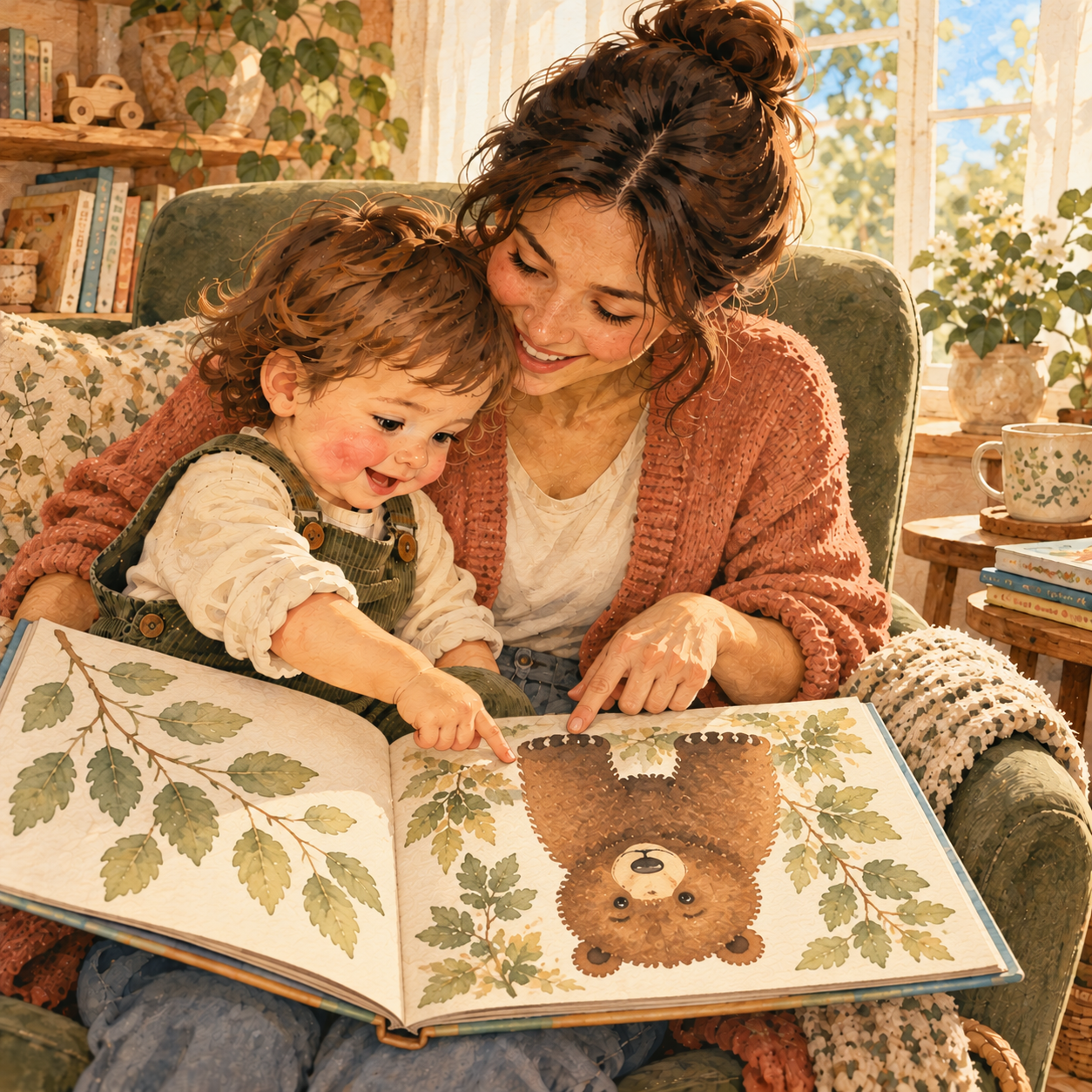
The CDC’s tips for 18 months include adding to the words your child says. If your child says “Dog,” you say, “Yes, that’s a dog. Dogs say ‘woof, woof.’” It also suggests reading books and talking about the pictures using simple words. By 30 months, it suggests asking simple questions about books, such as “Who?”, “What?” and “Where?”, and encouraging your child to name colors, body parts and pictures in books.
What does research say about sharing books? A 2020 review in Child Development pooled 19 randomized trials with 2,594 children, roughly ages 1 to 6, testing programs that support shared picture-book reading. The effects on children’s language were small. How much of the program children got mattered, and low-dose programs had minimal impact. The authors judged these programs promising. Those were structured programs for adults and children. The review says nothing about any particular book, including ours.
Ask one question, not ten. You don’t have to quiz your child on every page. Name it, point to it, and wait.
Praise the effort
In a study published in Child Development, researchers recorded parents and children at home at ages 1, 2 and 3, and followed up when the children were 7 to 8. Parents who used more “process praise” (praise for effort, strategies and actions) had children who, years later, thought of more strategies for setbacks and were more likely to believe that their traits can improve with effort. Praise aimed at fixed traits, like “You’re so smart,” was not linked to those outcomes. This is an association. It does not prove that praise causes the difference.
Instead of “You’re such a good artist!”, you could say, in our own wording:
- “You worked really hard on that.”
- “I like how you used so many different lines.”
Keep choices small
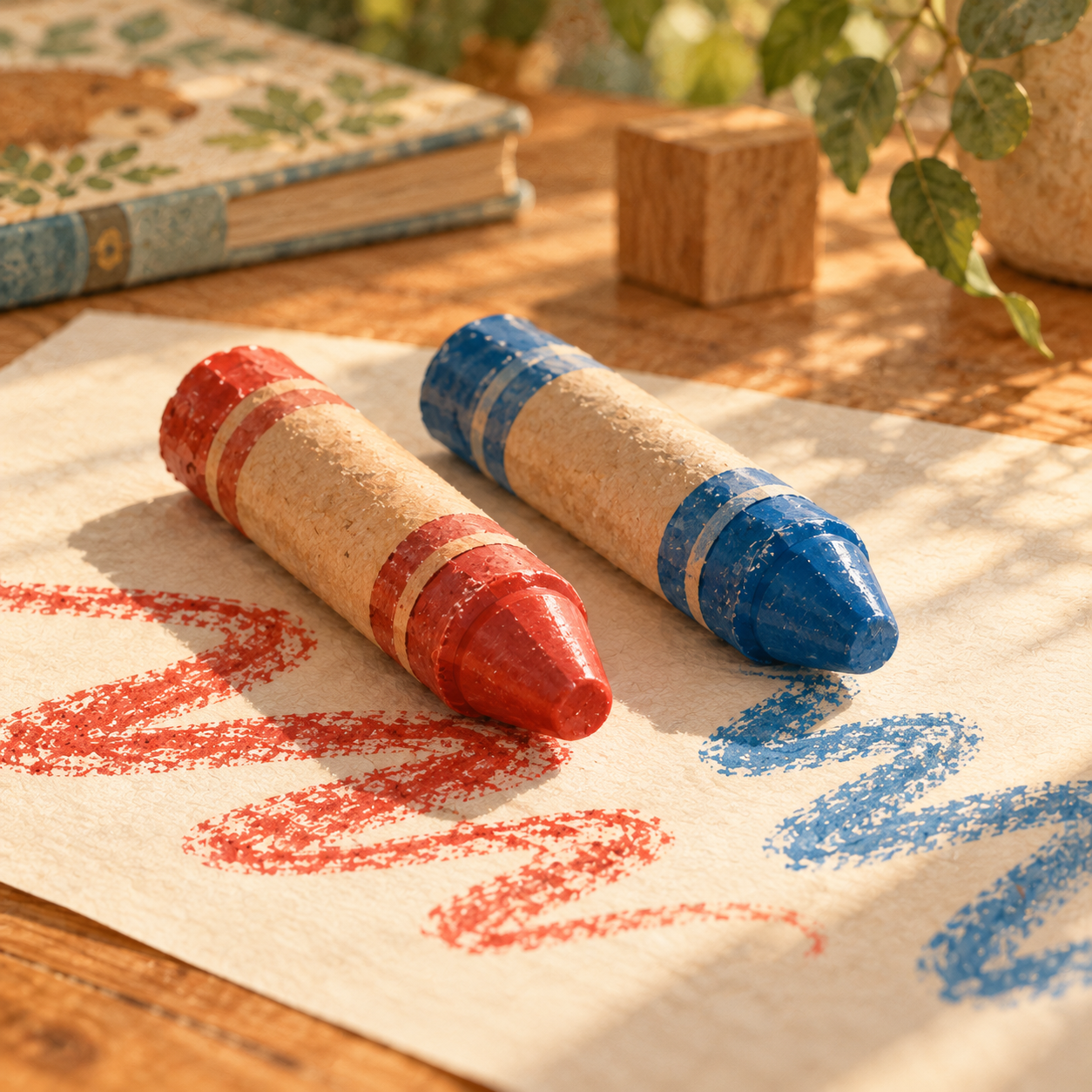
The CDC suggests giving simple choices at 18 months, between two things, such as a red or a blue shirt. At 30 months, it suggests limiting choices to two or three. Its examples are about food and clothes. Applied to coloring, it can look like holding up two crayons and asking, “Red or blue?”, instead of opening the whole box.
Try this today
- Give one or two crayons and one page. Let your child scribble.
- Say what you see: “You made a big blue circle.”
- Ask once: “Tell me about what you have here.”
- Point to a picture, say its name, and wait.
- Praise the effort, not the artist.
A page can last 30 seconds or five minutes. Both count. If your child walks away, you can come back later.
Books for pointing, naming and scribbling
We describe kinds of books, not titles, because titles come and go. Where a CDC or AAP page supports the idea, we say so. The rest is our own reading. Before you buy anything, our ten questions apply at every age.
Picture books with one clear picture per page
Something to point at and name: a bear, a cup, a car.
Why: CDC milestones: pointing to things in a book when you ask (2 years) and naming things in a book (30 months).
Sturdy pages that turn easily
Board books or thick pages a small hand can turn one at a time.
Why: The CDC lists turning book pages one at a time at 30 months.
Short, repeated text
A few words a page, repeated, that you can say together.
Why: Our reading. The CDC lists putting two words together at 2 years and about 50 words at 30 months.
Scribble and coloring books with big, open spaces
Thick lines, large shapes and plenty of blank room. Pages that welcome scribbling, not neat coloring inside the lines.
Why: The CDC’s drawing milestones are scribbling at 18 months and drawing a circle at 3, once you show how.
Everyday routines and pretend play
Eating, sleeping, bath, animals: things your child already knows and can act out.
Why: The CDC lists pretending with objects at 30 months, like feeding a block to a doll.
What to skip for now
Tiny details, pages that expect a neat result, and a lot of text on every page.
Why: Our reading, based on the milestones above.
Sources
- Centers for Disease Control and Prevention. Milestones by 18 months, 2 years, 30 months, 3 years.
- Grady, R. (2023). A scribble is never just a scribble: Art, story, and process. Teaching Young Children, 16(2). NAEYC. naeyc.org
- Fernando-Smith, L. (2023). Message in a Backpack: Encouraging process art at home: Reaping the benefits of joy and making. Teaching Young Children, 16(2). NAEYC. naeyc.org
- Longobardi, C., Quaglia, R., & Iotti, N. O. (2015). Reconsidering the scribbling stage of drawing: A new perspective on toddlers’ representational processes. Frontiers in Psychology, 6, 1227. doi.org/10.3389/fpsyg.2015.01227
- Dowdall, N., Melendez-Torres, G. J., Murray, L., Gardner, F., Hartford, L., & Cooper, P. J. (2020). Shared picture book reading interventions for child language development: A systematic review and meta-analysis. Child Development, 91(2), e383–e399. doi.org/10.1111/cdev.13225
- Gunderson, E. A., Gripshover, S. J., Romero, C., Dweck, C. S., Goldin-Meadow, S., & Levine, S. C. (2013). Parent praise to 1- to 3-year-olds predicts children’s motivational frameworks 5 years later. Child Development, 84(5), 1526–1541. doi.org/10.1111/cdev.12064
If you are worried about your child, talk to your child’s pediatrician. Our page For every age lists when to seek support. Links go to the original pages. Naming an organization or a study here does not mean it has reviewed or endorsed this guide or any Aurora Minds product. Last updated: October 2026.
This guide stays free and open.
If you’d like to hear when we add new guides, creative activities and useful resources, leave your email.
Thoughtful resources, sent occasionally. You can unsubscribe at any time.