
First grade and growing independence
School days get longer. Children think more about the future, understand more about rules and friendships, and want more say in what they do.
← All stages
General information, not medical advice. Every child develops at their own pace, and a web page can’t assess an individual child. If you have questions about how your child is growing, learning, feeling or behaving, talk to your child’s pediatrician.
What many children do at this age
The CDC’s milestone checklists end at age 5. From here on, we use the American Academy of Pediatrics (AAP), through its parent site HealthyChildren.org.
6 years
- Thoughts and emotions get deeper, and children start to think about the future
- More curious about the world
- Many can balance on one foot, hop and skip
- Can tell stories in full sentences
7 years
- Starting to understand rules, relationships and social behavior
- Want more choices of their own
- Can help with chores, like making the bed or setting the table
8 years
- Use logic and reason in new ways each day
- Can handle several parts of a problem
- Friends matter more, and a “best” friend may appear
- Start to meet beliefs that differ from the family’s
Source: AAP, HealthyChildren.org, Your Checkup Checklist for 6, 7 and 8 years old. Paraphrased.
If your child seems to be falling behind in first grade, the AAP suggests talking to your pediatrician.
Choices, chores and movement
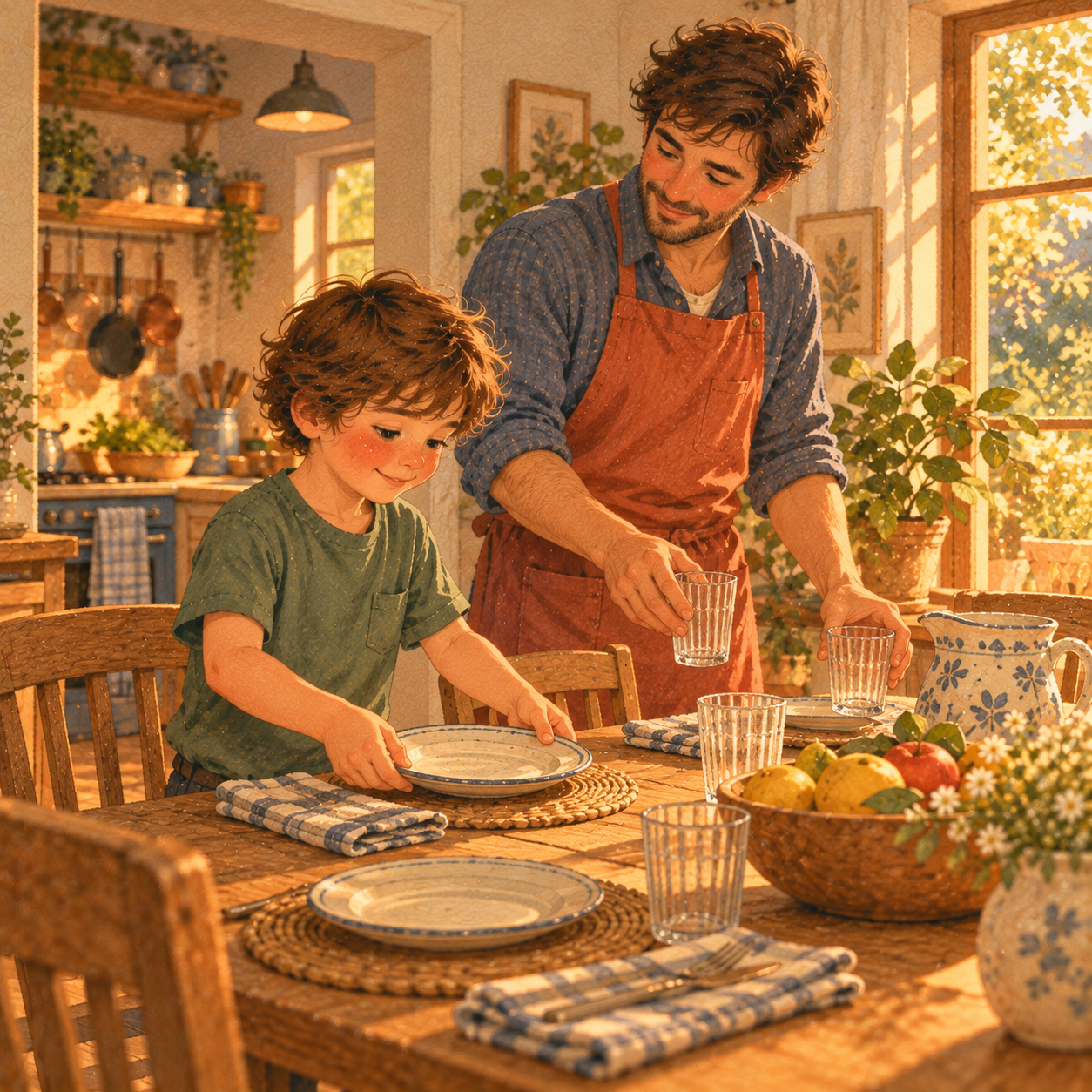
The AAP notes that first grade can mean 6 to 8 hours of school a day. At 7, it lists chores such as making the bed or setting the table, and describes children who want more choices of their own. At 7 it also mentions at least 60 minutes of activity, and at 8 about 60 minutes of moderate to vigorous activity on most days.
For screens, the AAP’s page for 8-year-olds points parents to a Family Media Plan.
Come back to it. Spacing practice over time is one of the recommendations in the IES practice guide on how to study.
Little and often

The Institute of Education Sciences (IES), part of the U.S. Department of Education, published a practice guide by Pashler and colleagues in 2007 on organizing instruction and study. Two of its recommendations are within reach of a parent. “Space learning over time” is rated as moderate evidence. “Use quizzes to re-expose students to key content” is rated as strong evidence.
The guide is written for school subjects, from K–12 to college. It is not about drawing or coloring books, and it does not show that any particular activity works. Our reading for home: return to a favorite page a few days later, and ask your child to tell you what they remember before you look at it together.
Books for curiosity, logic and choosing for themselves
We describe kinds of books, not titles, because titles come and go. Where a CDC or AAP page supports the idea, we say so. The rest is our own reading. Before you buy anything, our ten questions apply at every age.

Read-alouds and first chapter books
Illustrated chapter books to read together one chapter at a time, and early readers for your child to read alone.
Why: Our reading. The AAP describes 6-year-olds who tell stories in full sentences.
Non-fiction about what they are curious about
Animals, space, how things work.
Why: The AAP describes 6-year-olds as more curious.
Puzzle, logic and maze books
Pages with several steps, where your child has to work out the order.
Why: The AAP says 8-year-olds use logic and reason in new ways each day and can handle several parts of a problem.
Drawing and craft books with choices
Books where your child decides what to draw or make next.
Why: The AAP describes 7-year-olds who want more choices of their own.
Stories about friends, rules and feelings
A way to talk about fairness, best friends and people who think differently.
Why: The AAP says 7-year-olds start to understand rules and relationships, and 8-year-olds meet beliefs that differ from the family’s.
Books you can come back to
Activity books with pages you can revisit a few days later, not finish in one sitting.
Why: “Space learning over time” is an IES recommendation (moderate evidence). Applying it to books is our reading.
Sources
- American Academy of Pediatrics, HealthyChildren.org. Your Checkup Checklist for 6, 7 and 8 years old.
- Pashler, H., Bain, P. M., Bottge, B. A., Graesser, A., Koedinger, K., McDaniel, M., & Metcalfe, J. (2007). Organizing instruction and study to improve student learning. Institute of Education Sciences, What Works Clearinghouse. ies.ed.gov
If you are worried about your child, talk to your child’s pediatrician. Our page For every age lists when to seek support. Links go to the original pages. Naming an organization or a study here does not mean it has reviewed or endorsed this guide or any Aurora Minds product. Last updated: October 2026.
This guide stays free and open.
If you’d like to hear when we add new guides, creative activities and useful resources, leave your email.
Thoughtful resources, sent occasionally. You can unsubscribe at any time.