
Pretending, asking and telling stories
Pretend play gets more elaborate, sentences get longer, and the questions start. By 5, many children can tell a short story and write a few letters of their name.
← All stages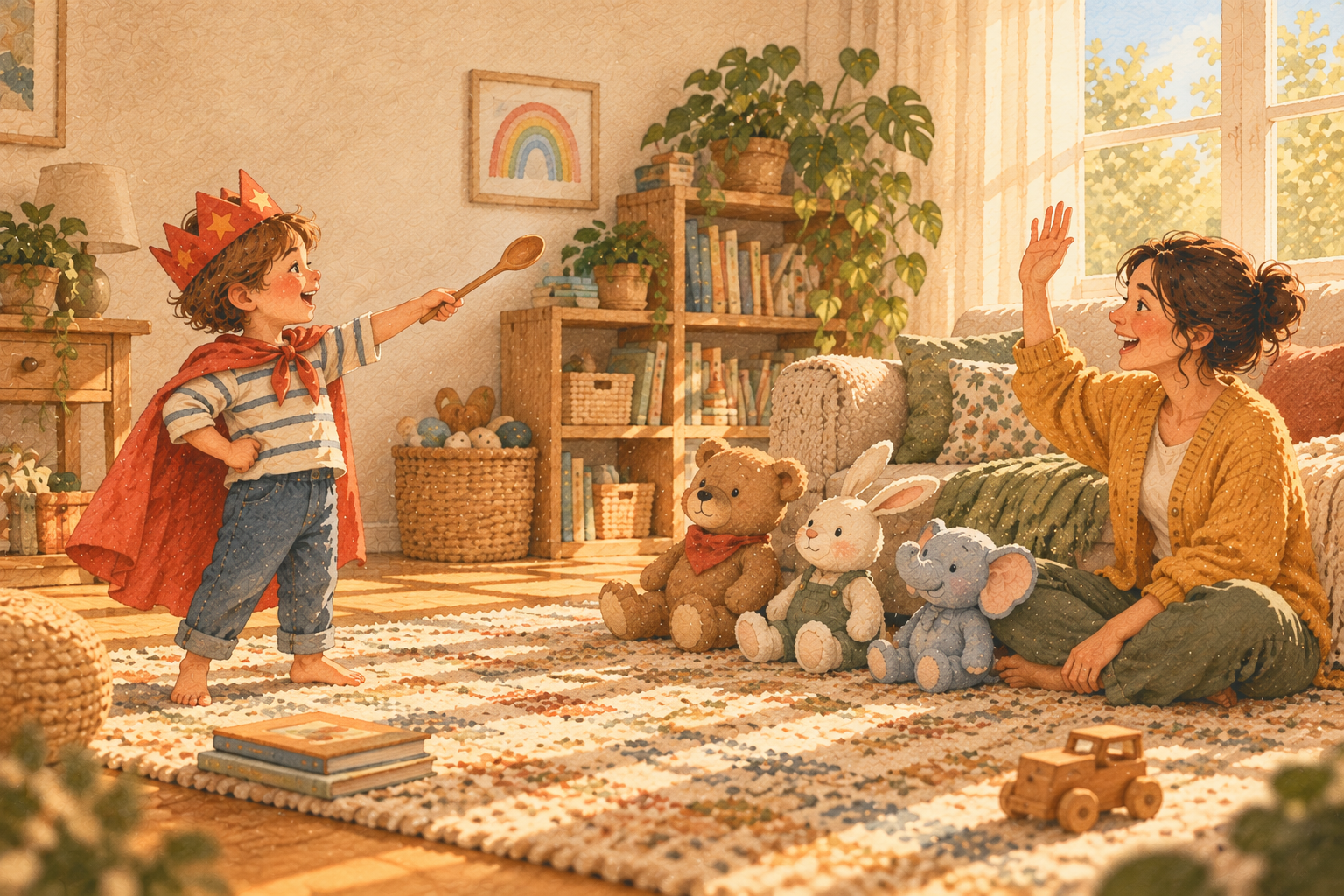
General information, not medical advice. Every child develops at their own pace, and a web page can’t assess an individual child. If you have questions about how your child is growing, learning, feeling or behaving, talk to your child’s pediatrician.
What many children do at this age
Age 3 is covered on the Ages 1–3 page. These are CDC milestones for 4 and 5 that connect with play, stories and early drawing and writing.
4 years
- Pretends to be something else during play, like a teacher, a superhero or a dog
- Says sentences with four or more words
- Tells what comes next in a well-known story
- Draws a person with three or more body parts
- Holds a crayon or pencil between the fingers and thumb, not in a fist
- Names a few colors of items
5 years
- Tells a story they heard or made up, with at least two events
- Keeps a conversation going with more than three back-and-forth exchanges
- Uses or recognizes simple rhymes, like bat-cat or ball-tall
- Pays attention for 5 to 10 minutes during activities
- Writes some letters in their name
- Counts to 10
Source: CDC, milestones by 4 years and 5 years. Wording adapted.
Neither list mentions coloring inside the lines. What they list is pretending, talking, telling stories and using the hands.
What the CDC suggests

The CDC’s tips for ages 4 and 5 include:
- Read together, and talk about what might happen next.
- Point out colors, shapes and sizes as you go.
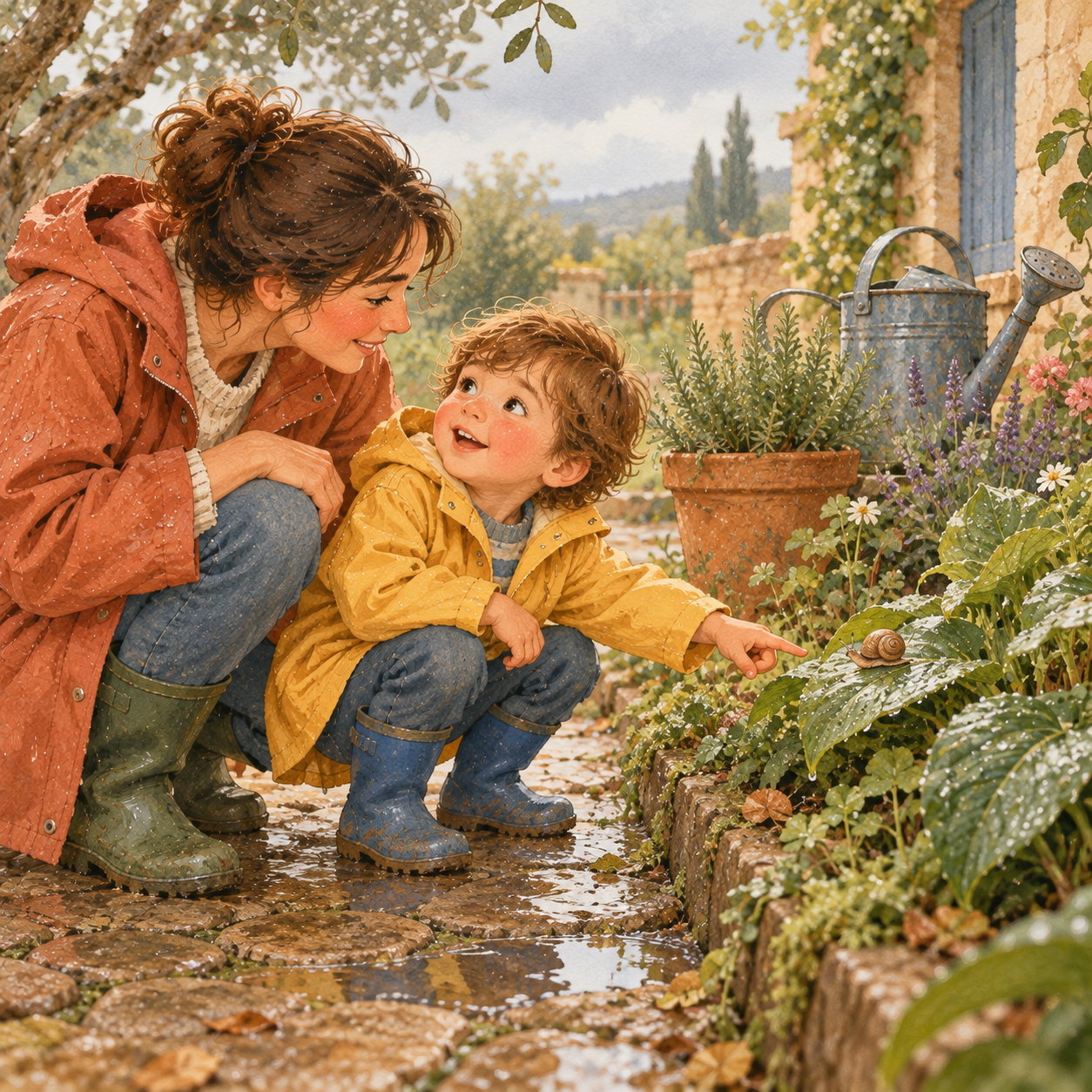
- Answer your child’s “why” questions, and ask open “why” and “how” questions about their play.
- Offer two or three choices instead of an open question.
- Use words like “first,” “second” and “finally” when you describe a routine or a story.
- Offer puzzles and blocks.
- Let your child do tasks on their own, even if the result isn’t perfect.
- Play pretend school or role-play before kindergarten.
Some things you can say, in our own wording:
- “What do you think happens next?”
- “Tell me about your picture.”
- “Would you like to choose what we do next?”
A coloring page can be a place to practice holding a crayon between the fingers and drawing a person. It doesn’t have to be a place to be graded.
Books for stories, questions and early drawing
We describe kinds of books, not titles, because titles come and go. Where a CDC or AAP page supports the idea, we say so. The rest is our own reading. Before you buy anything, our ten questions apply at every age.

Stories with a beginning, a middle and an end
Stories you can retell together or ask “what happens next?” about.
Why: The CDC lists telling what comes next in a well-known story (4 years) and telling a story with at least two events (5 years).
Rhyming books
Simple rhymes you can finish together.
Why: The CDC lists using or recognizing simple rhymes at 5 years.
Picture books about feelings, friends and starting school
A way to talk about what is coming before it arrives.
Why: The CDC’s tips suggest role-playing to get ready for kindergarten. Choosing books for it is our reading.
Drawing, tracing and early writing books
Chunky lines to follow, people to draw and spaces for a few letters.
Why: The CDC lists holding a crayon between fingers and thumb, drawing a person with three or more body parts (4 years) and writing some letters of their name (5 years).
First counting, letters and shapes
Simple books about numbers up to 10, letters, colors, shapes and sizes.
Why: The CDC lists counting to 10 at 5 years, and its tips suggest pointing out colors, shapes and sizes.
Why and how books
Simple non-fiction with one question per page.
Why: The CDC’s tips suggest answering your child’s “why” questions. Matching books to them is our reading.
Sources
If you are worried about your child, talk to your child’s pediatrician. Our page For every age lists when to seek support. Links go to the original pages. Naming an organization or a study here does not mean it has reviewed or endorsed this guide or any Aurora Minds product. Last updated: October 2026.
This guide stays free and open.
If you’d like to hear when we add new guides, creative activities and useful resources, leave your email.
Thoughtful resources, sent occasionally. You can unsubscribe at any time.